
Portfolio: A portfolio you can step into, room by room
I designed and built this site to tell my story. It's 14 pages, and most of them open into a room, among them the lagoon in Lagos, a radio studio, a field book, and About, read to you in my voice.
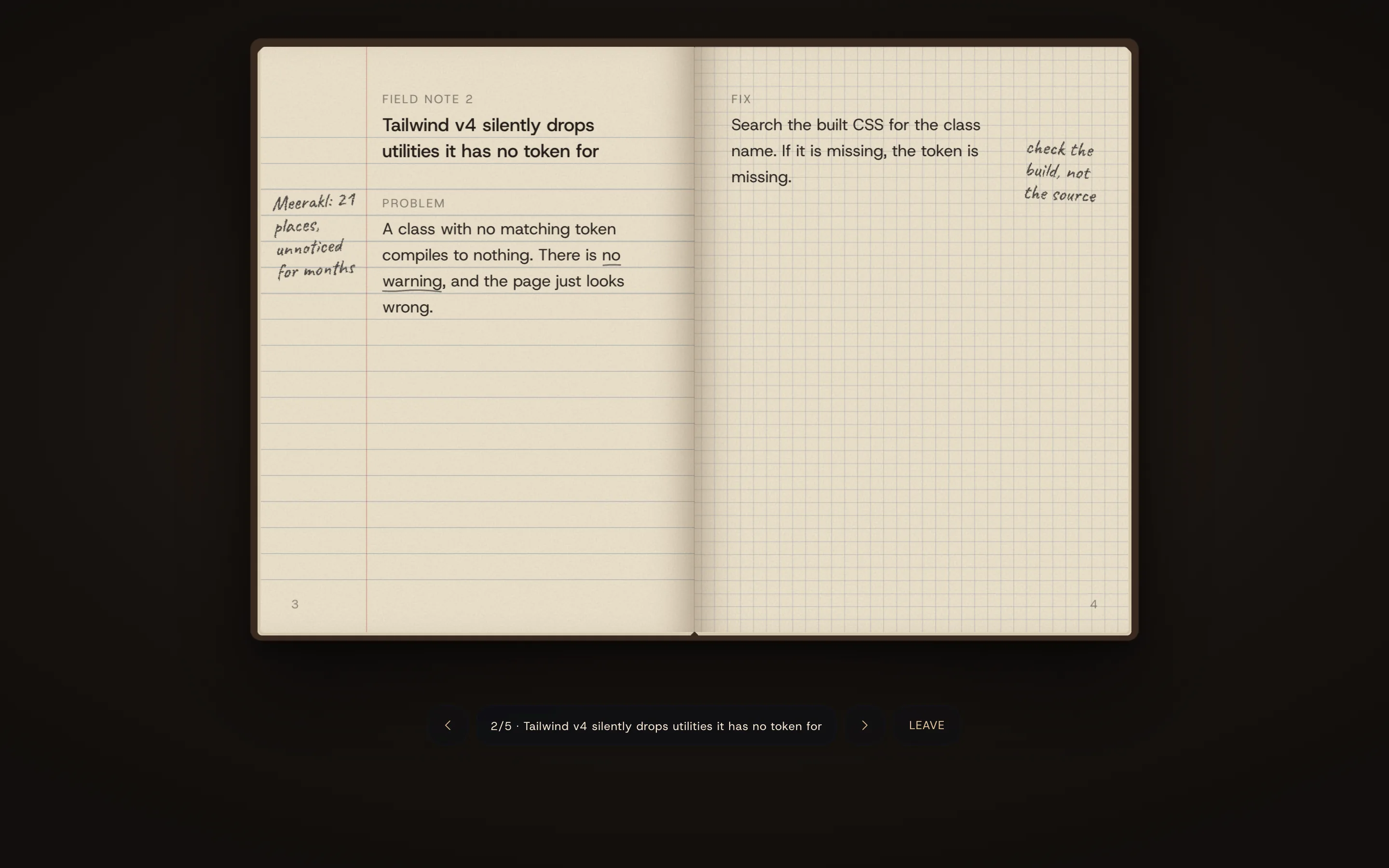
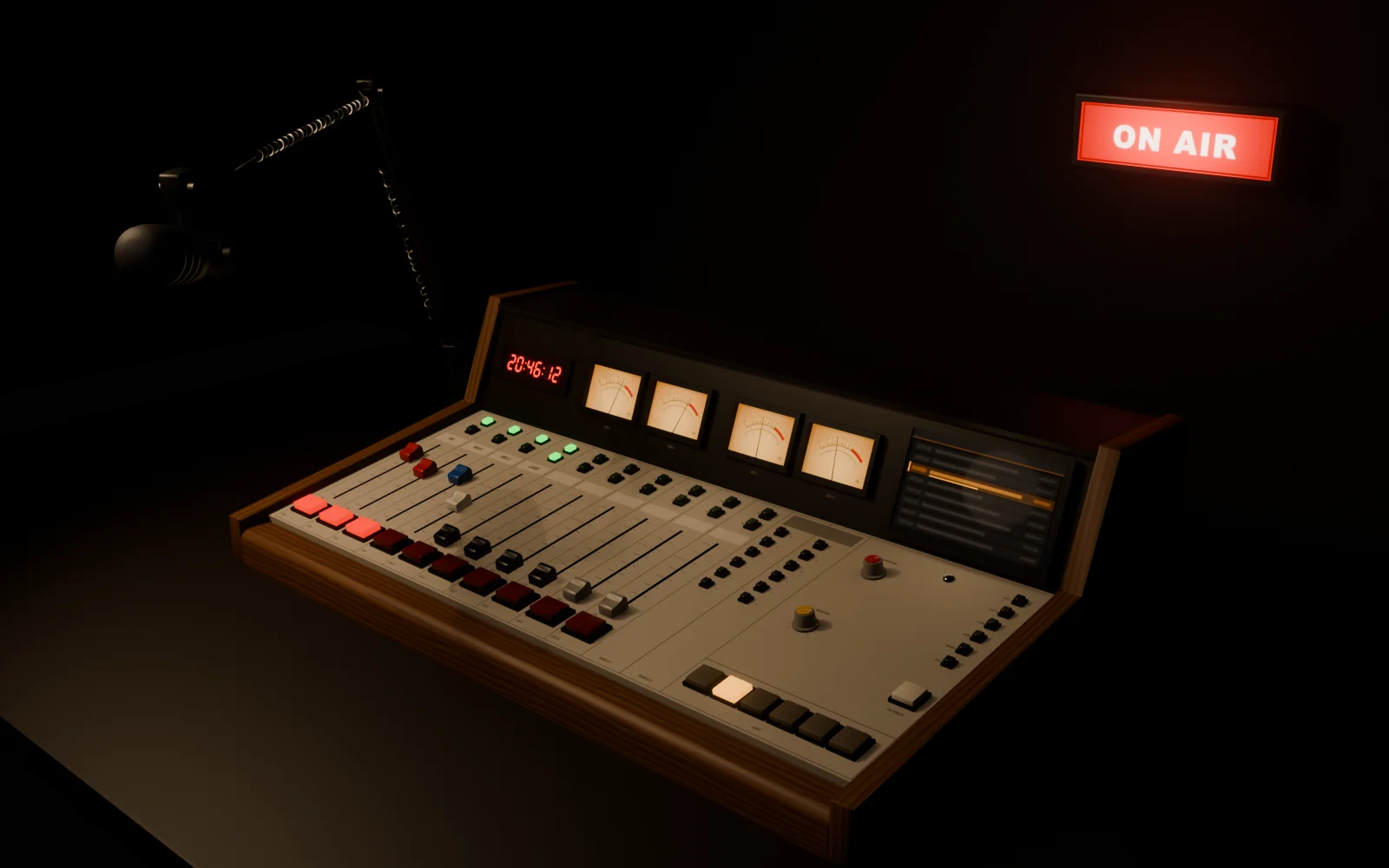
I enjoy the interactive web a lot, so I made the site an experience you step into. Every room is my own life: I'm a trained broadcaster, so there's a radio studio, and I studied geology, then surveying and geoinformatics, so Writing is a field book.
The home: Lagos by your own clock
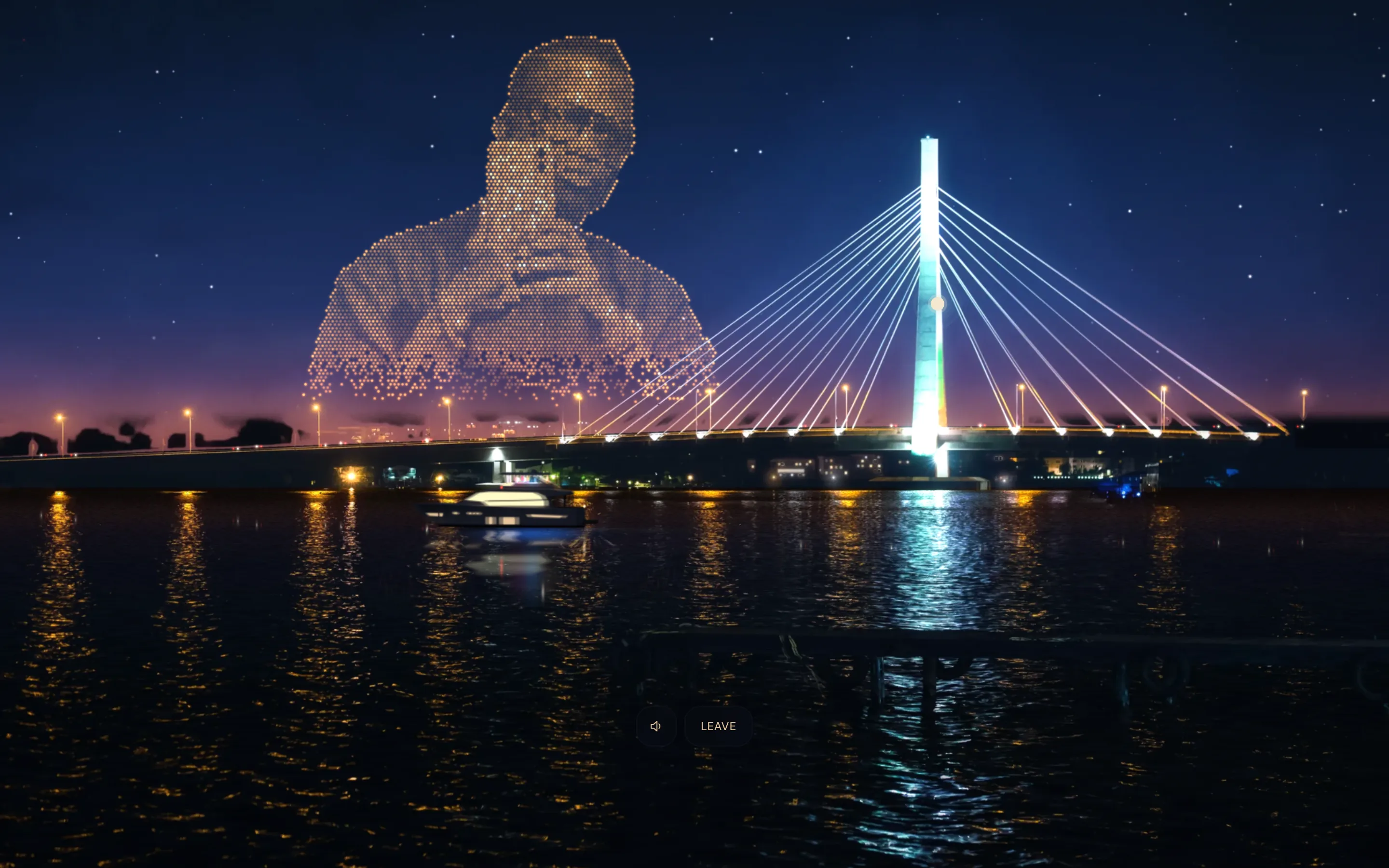
- ArrivalThe lagoon and the sky move
- IMMERSETraffic, a yacht, drones at night
- LiveLagos's weather and the real moon
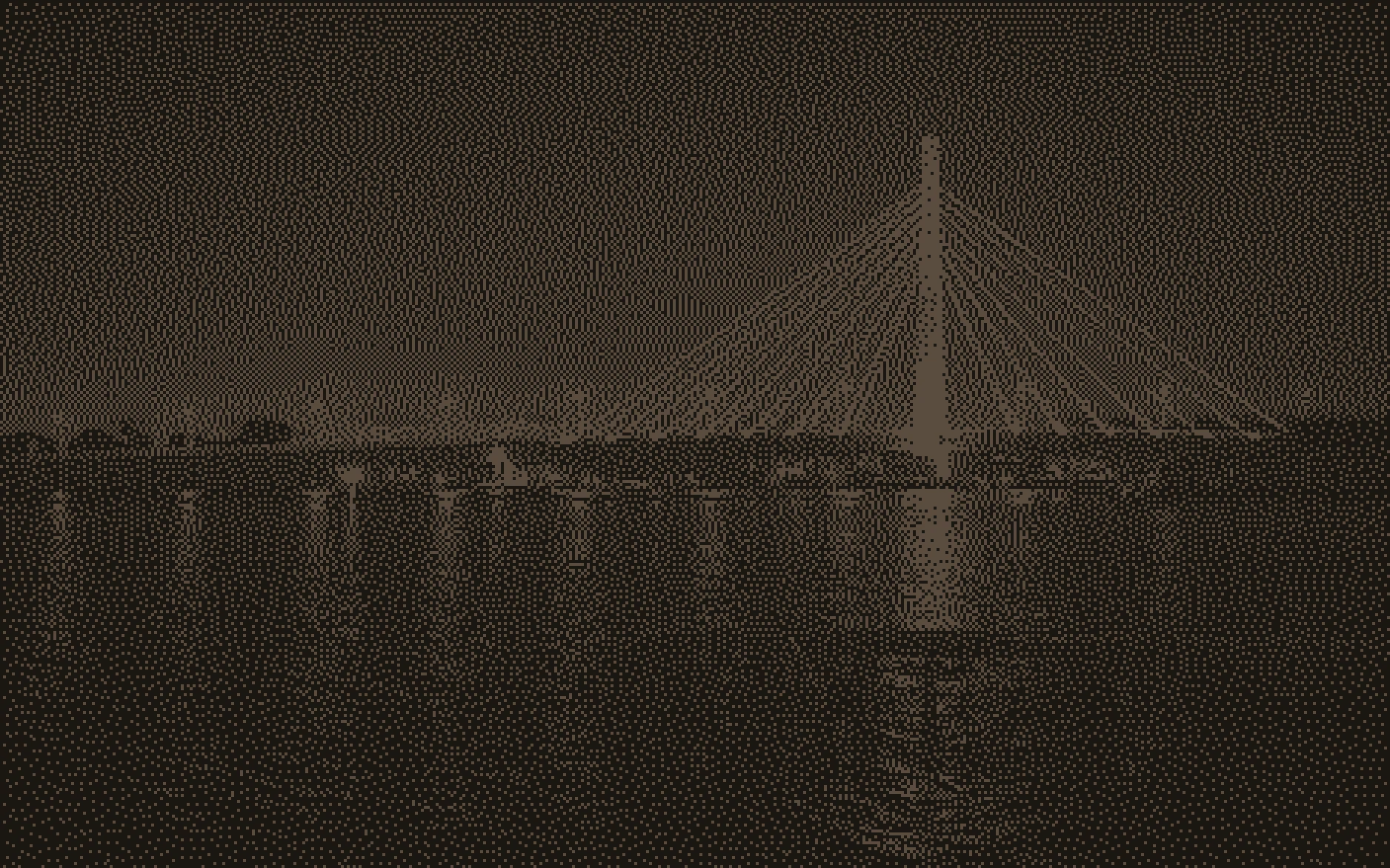
A photograph of the Lekki–Ikoyi Link Bridge, at dusk or by day by your own clock, with Lagos's real weather on the lagoon: cloud, rain, lightning.
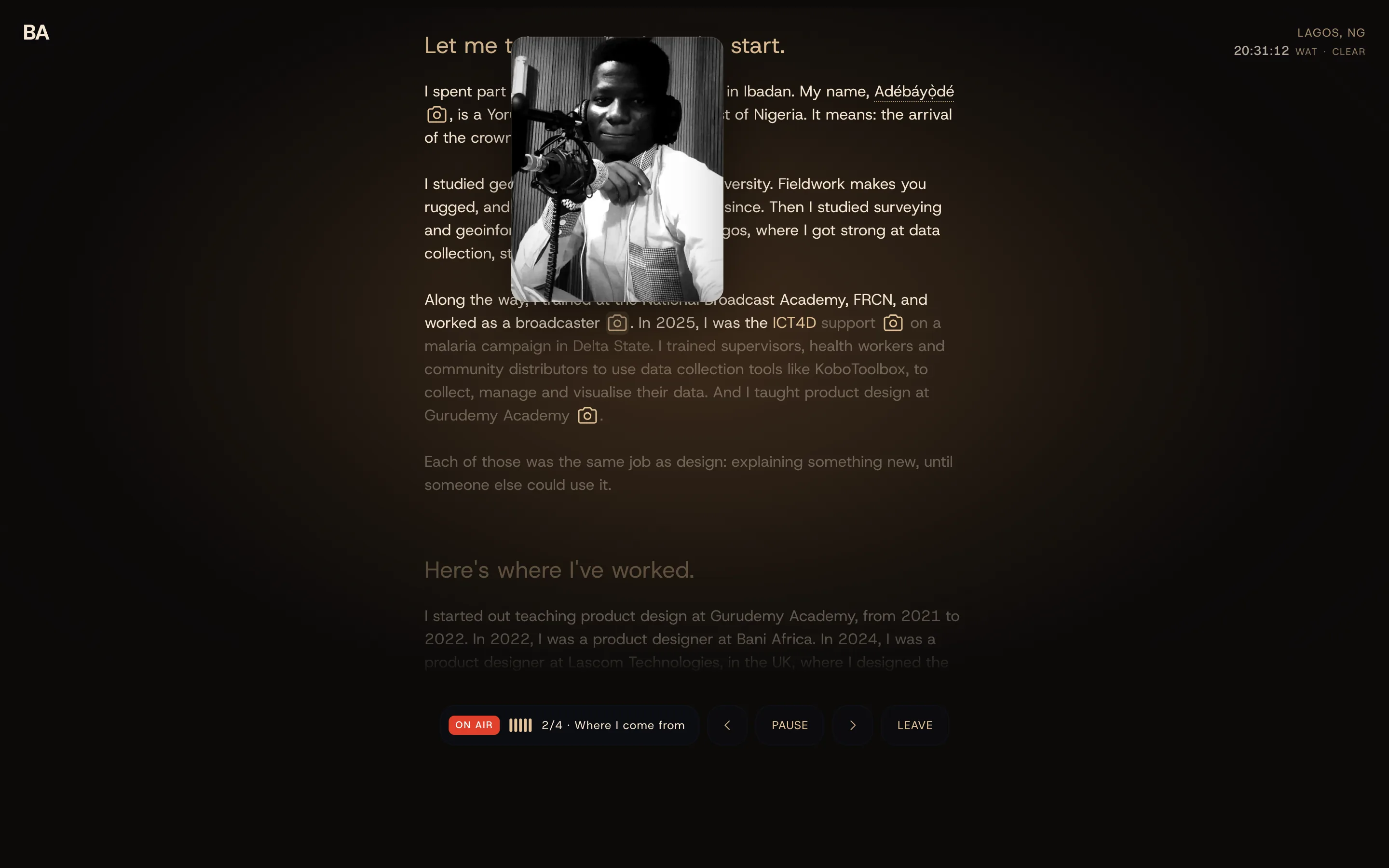
About: my story, read on air
- The readingFour parts, each word lit as I say it
- The soundscapeThe places in my story, under my voice
- The windowLagos's light and weather, now
The soundscape follows the story: home in Ile-Ife and Ibadan, a talking drum saying my name, a hammer for the geology, a surveyor's beep, rain on a zinc roof in Delta State.
Selected rooms: from the lagoon to the studio
The build: plain HTML, CSS and JavaScript
I built the site end to end: 14 pages, designed in Figma, then written in plain HTML, CSS and JavaScript, with no framework and no build step. It's hosted on Vercel, with one small server function for Lagos's weather. Below are the rooms in use, how I worked with AI tools, and the decisions that shaped it and what each one cost.
The rooms in use: three recordings
AI in the build: who did what
- DirectionI set it, and made every decision
- MakingAlongside Claude Code and other AI tools
- ReviewScreenshots and recordings, then my go-ahead
I built it alongside Claude Code. The studio desk was modelled with Claude through the Blender MCP, Figma Make made the day photo from the night one, and Whisper timed the reading's words. Nothing went live without my go-ahead.
Decisions I took
-
Build every room from my own life
Why The direction wasn't clear until I approached it by telling my story. From there, each room comes from my life: a radio studio for the broadcaster, a field book for the surveyor.
Cost Seven rooms to build, from the lagoon to a typewriter and a contact sheet, each with its own script, sounds and quiet version.
-
Put the studio on Lagos time
Why The three shows run by Lagos time, so the show on air matches the studio clock. At the hour, the record playing finishes before the next show starts, as on real radio.
Cost A new show can start up to a record late, and a visitor abroad hears Lagos's hour, not their own.
-
Frame the desk in five shots, not a free orbit
Why Dragging already moves the faders, and a free orbit would show the parts of the room I didn't build. Five set shots and AUTO keep the desk in frame.
Cost No looking round the room: the camera only goes where I put it.
-
Stay static, with nothing to build
Why Plain HTML, CSS and JavaScript, the libraries vendored, and three.js loaded only in the studio. Every sound but my voice and the music is made in the browser, so there's no sound file to download.
Cost No framework to lean on, and one stylesheet of 1,656 lines. The studio still downloads about 470 KB on a first visit.
-
Support the keyboard, screen readers and reduced motion in every room
Why Every room works without a mouse, without sight and without motion, so the story gets through however someone visits. The studio's controls are also real controls on the page.
Cost Each room has a quiet version to build too: the camera cuts, the sky stays still, the darkroom is only a tint.
The home was inspired by iniabiodun.com.